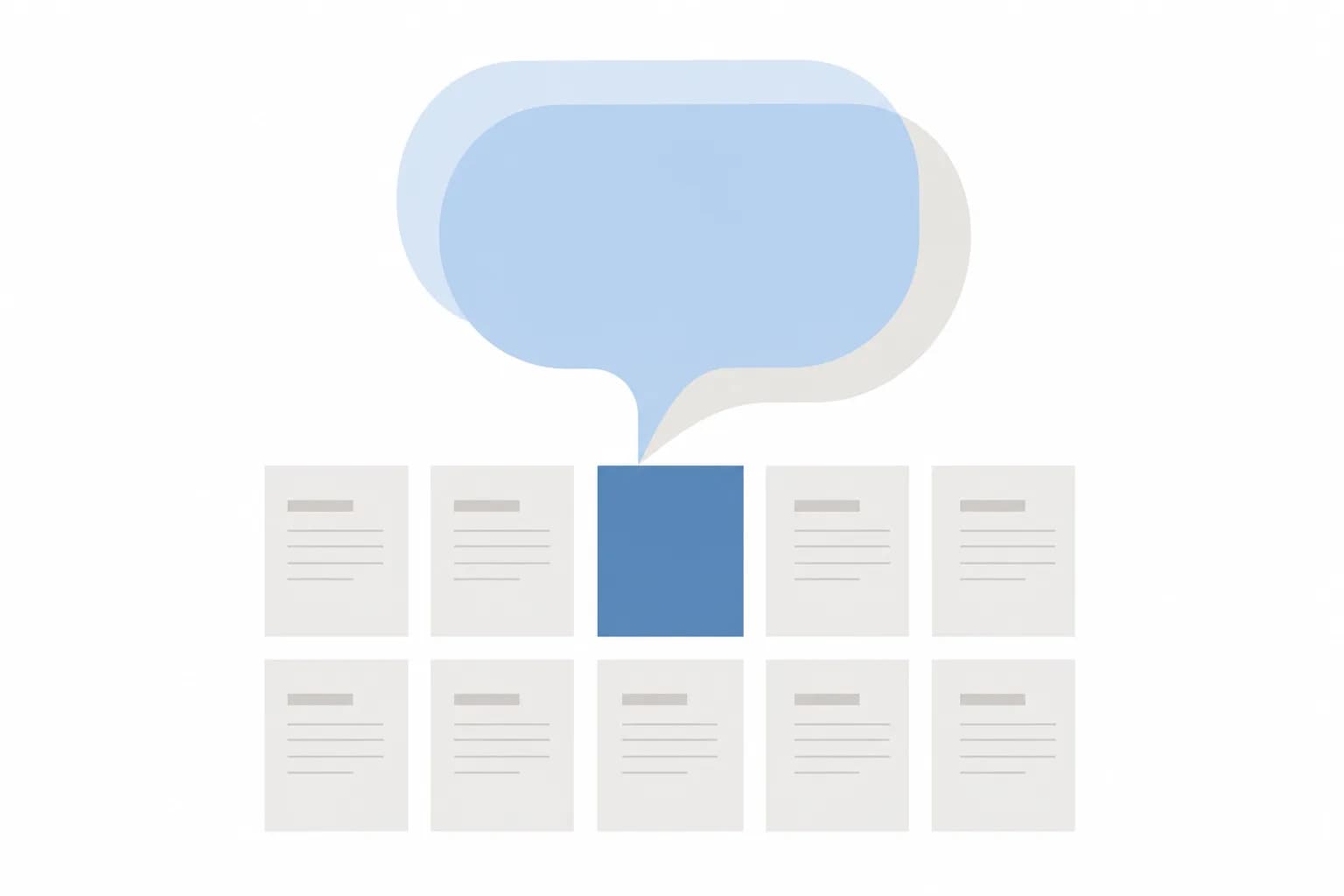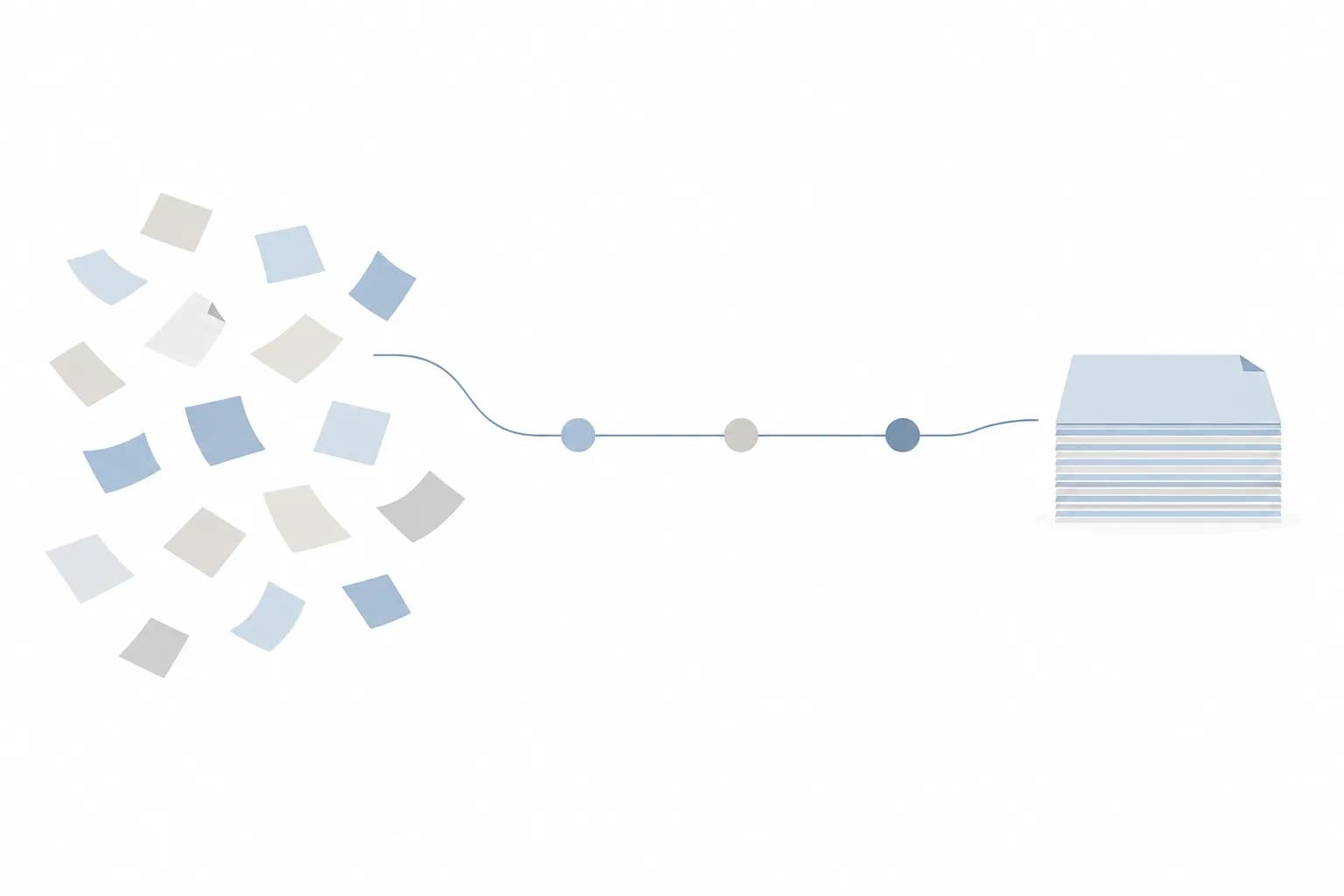

A large language model can help draft, summarize and work with language-based information. For a business, the useful question is which repeated task it can assist with and how a person will check the result. A fluent response is not proof that the information is correct.
Start with a task your team already understands
Choose work with clear inputs and a reviewable output. Possible examples include summarizing an enquiry, extracting fields from a document or preparing a draft from an approved brief. Keep the first trial narrow enough that your team can compare the output with the original material.
Give the model relevant information
A draft needs context: the audience, purpose, source information and expected format. For internal knowledge search, agree which documents are approved and ask for source links. Access to useful material matters more than a prompt that simply asks the model to “be an expert.”
Decide where human review belongs
A person should be able to check the source, edit the output and reject it. Define review responsibilities before the task is used with customers. Avoid a workflow in which a draft becomes an approved answer merely because no one noticed an error.
Compare the whole workflow
Record the manual effort for the task, then include setup, corrections and review in the assisted version. A fast first draft is useful only if the final result meets your requirements. Also discuss provider costs, access permissions and who maintains the integration.
What should you bring to a first conversation?
Bring a description of the repeated task, a few approved examples, the tools involved and the output you need. Digital Revo’s AI automation service can assess whether a language model, a conventional integration or both fit the workflow.